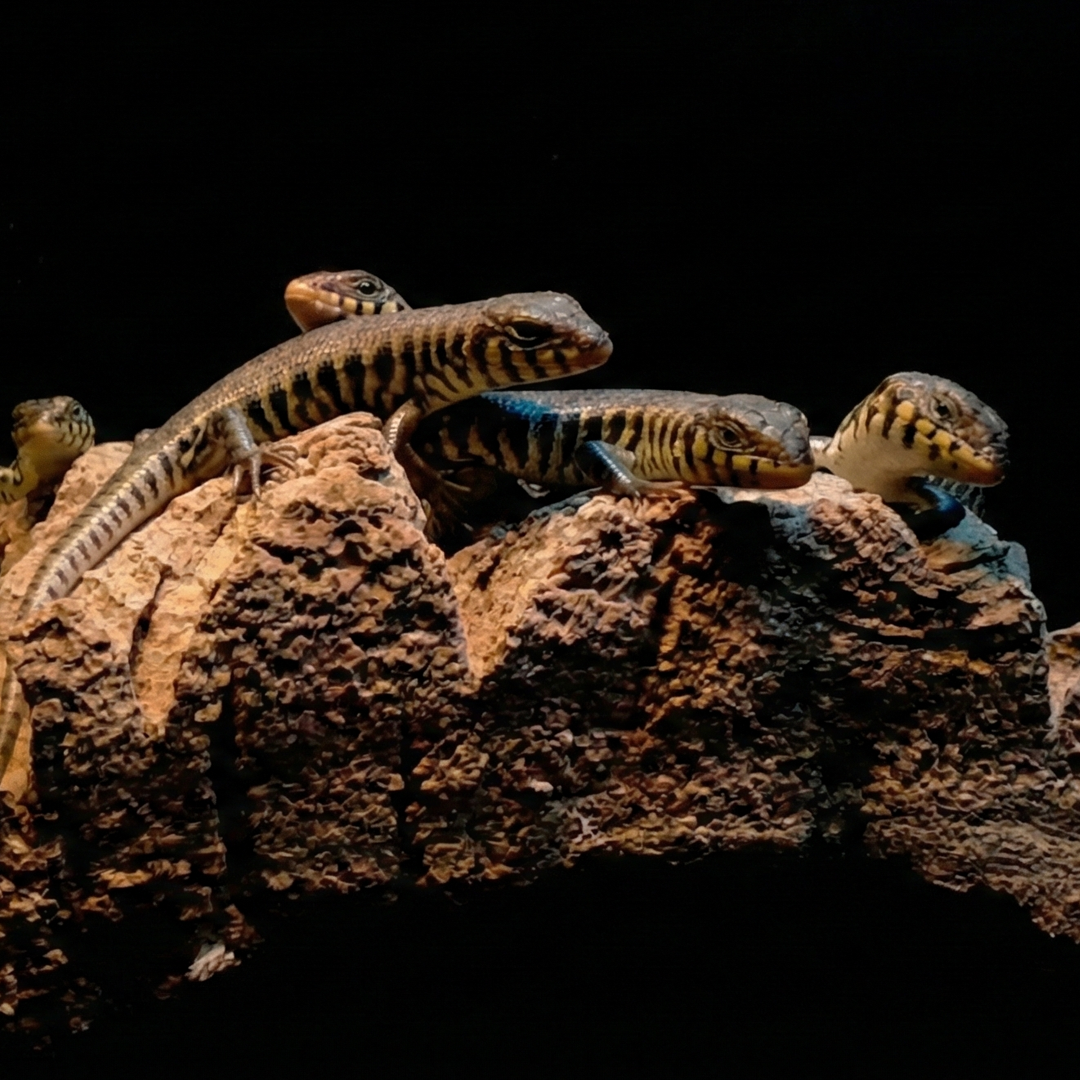

Leopard Gecko Care Guide
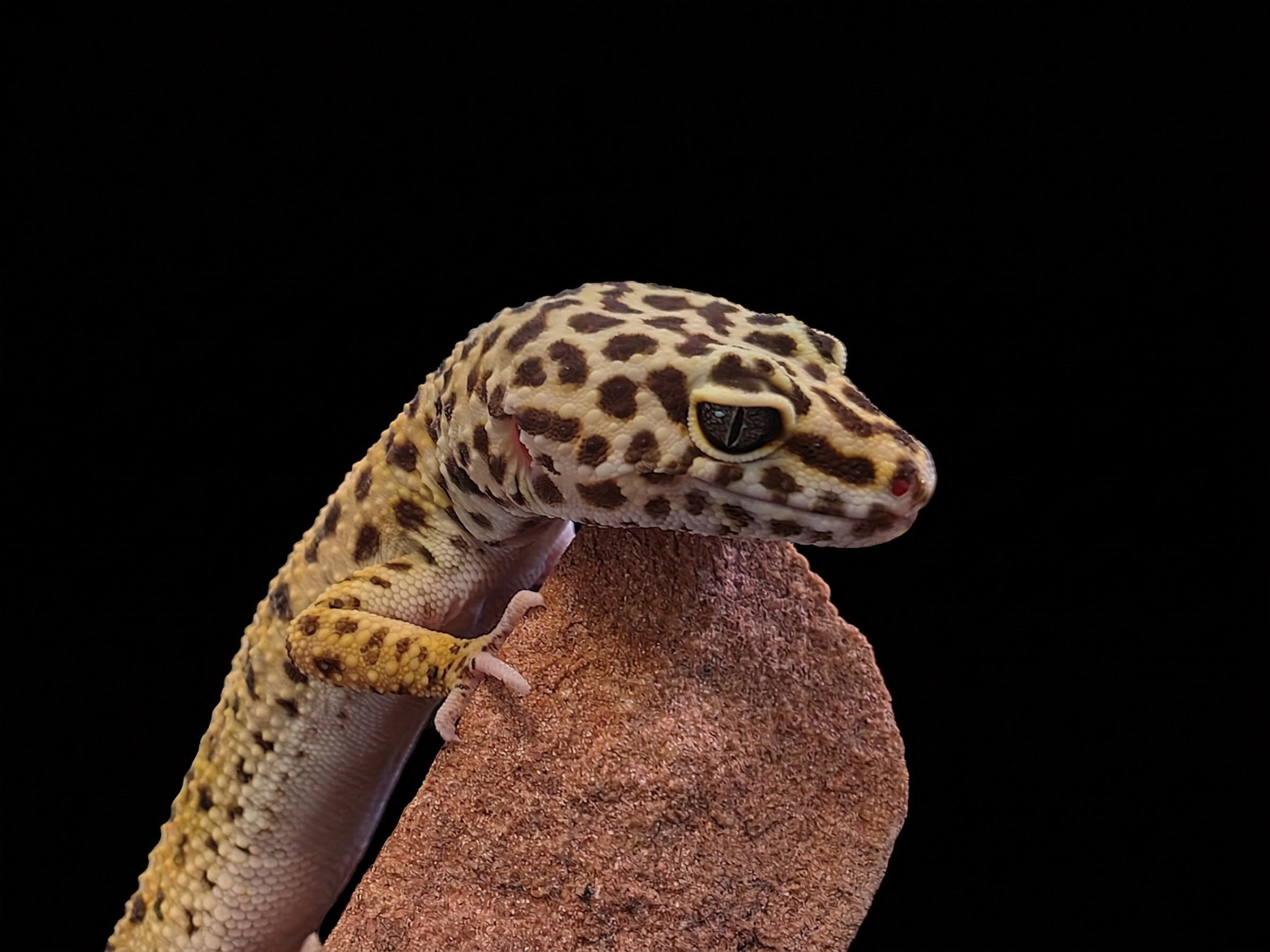
Leopard geckos are small-to-medium ground-dwelling lizards that typically reach 7 to 10 inches in length from snout to tail. They are native to the arid, rocky, and semi-desert regions of Afghanistan, Pakistan, northwest India, and Iran. With proper care, they are incredibly long-lived, boasting a 15-20 year lifespan (and sometimes even longer). Due to their docile nature, striking patterns, and easygoing temperament, leopard geckos are widely considered one of the best and most popular reptile pets for keepers of all experience levels.
Housing Requirements
As a primarily ground-dwelling, crepuscular species (active at dawn and dusk), leopard geckos need terrariums that offer plenty of floor space and secure places to hide.
Enclosure Size: The minimum recommended enclosure size for a single adult leopard gecko is 36”L x 18”W x 18”H (a 40-gallon breeder).
Grow-Out Enclosures: Baby leopard geckos can temporarily be kept in smaller "grow out" enclosures (like a 20-gallon long), but they will outgrow it quickly and should be upgraded to their adult enclosure as they mature.
Cohabitation: Cohabitation is strictly not recommended. Leopard geckos are solitary and territorial animals. Housing them together often leads to severe stress, competition for resources (like heat and food), and dangerous fights that can result in dropped tails or severe injuries.
Heating & Lighting
Leopard geckos are arid climate animals, so their overall enclosure humidity should remain low, ideally between 30-40%, but they absolutely require access to humid microclimates.
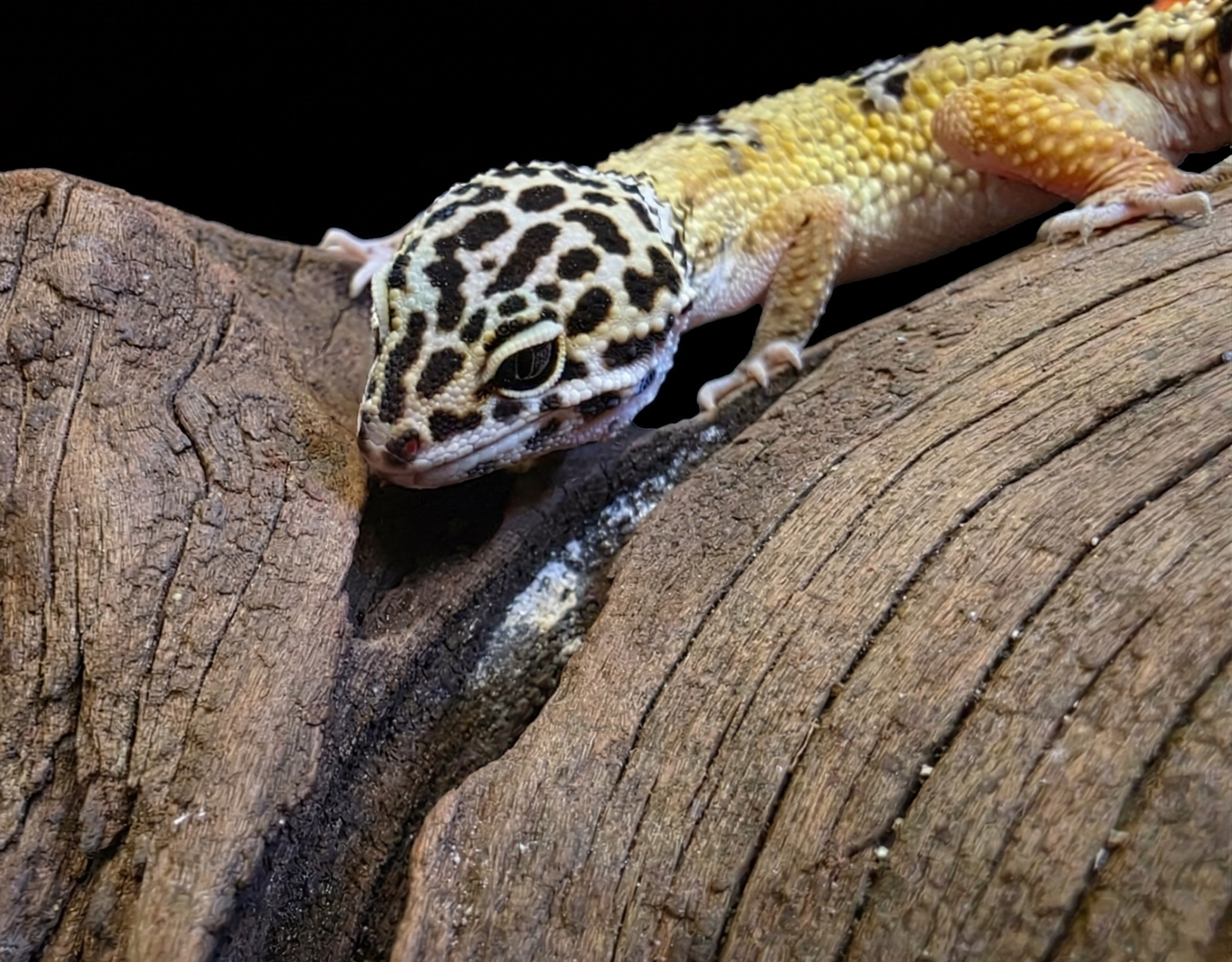
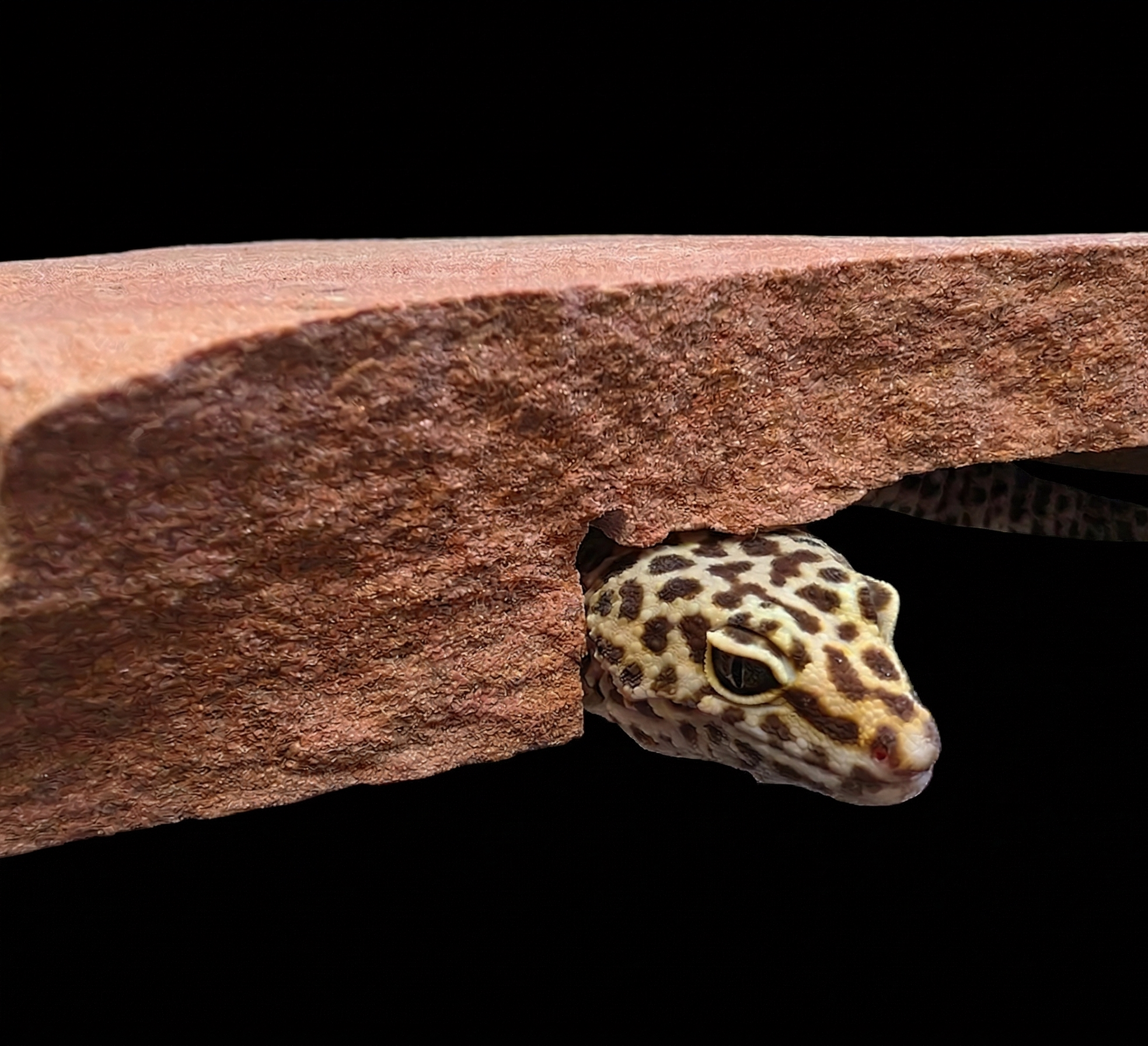
Temperature: You must provide a temperature gradient. The warm side basking surface should reach between 90-95°F (32-35°C). Leopard geckos rely heavily on belly heat to properly digest their meals, which is why we highly recommend using our Custom Natural Stone Caves as their primary warm hide. The real rock efficiently absorbs overhead warmth and radiates heat up to your gecko's belly while they rest inside or on top. The ambient temperature on the warm side should be around 85°F, fading down to a cool side of 70-75°F (21-24°C) so your gecko can thermoregulate.
Nighttime: Turn off all heat and light at night. A nighttime temperature drop is completely natural and healthy. As long as your house does not drop below 65°F (18°C), no nighttime heating is required.
UVB Lighting: While historically kept without it, modern reptile science shows that low-level UVB is incredibly beneficial. We highly recommend a dedicated shade-dweller UVB bulb (usually a T5 7% bulb) overlapping with their warm side. This prevents Metabolic Bone Disease (MBD) and promotes natural behaviors.
Plant Lighting: To keep your live plants thriving in a bioactive setup, we highly recommend a full-spectrum LED plant grow light. This, combined with your heat and UVB, will establish a brilliant, natural 12-hours-on, 12-hours-off day/night cycle.
Humidity & Hydration
Leopard geckos are arid climate animals, so their overall enclosure humidity should remain low, ideally between 30-40%, but they absolutely require access to humid microclimates.
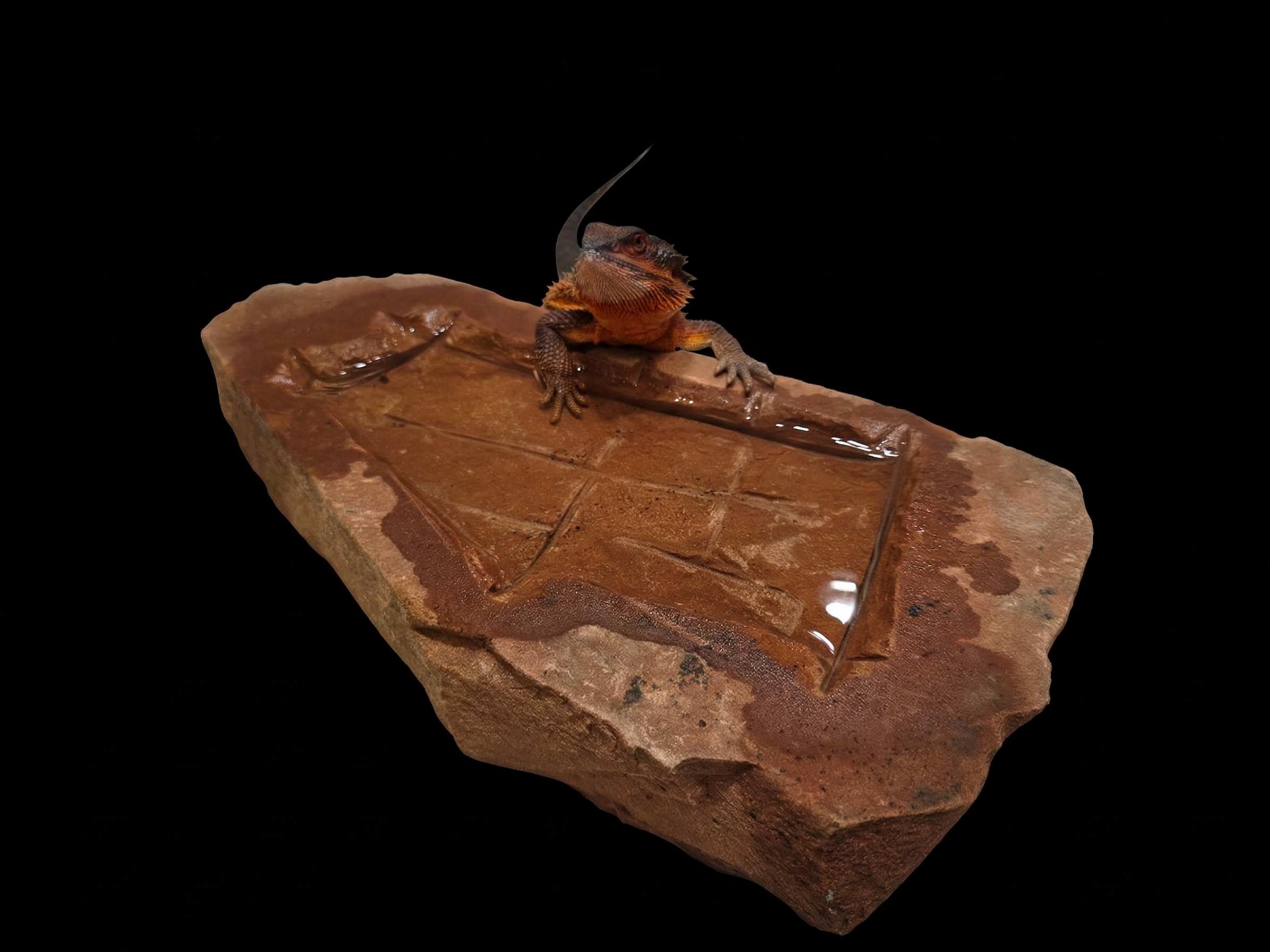
Hydration & The "Clean-up Crew Oasis": Even in an arid setup, your clean-up crew (like our hardy isopods and springtails) needs moisture to survive. This is where our Custom Natural Stone Bowls shine. Made from real sandstone, these water bowls naturally wick moisture into the soil over time. This creates an oasis under the bowl where humidity-seeking bugs can gather and breed, provides a small, reliable trickle of water to the roots of nearby live plants, and gives your gecko a clean water source to drink from.
Humid Hides: Leopard geckos specifically need higher humidity to successfully shed their skin and stay hydrated. By soaking porous rock like our Custom Natural Stone Caves, you can create a localized, natural "humid hide" without raising the humidity of the entire tank.
Bioactive Substrate, Plants, & Decor
An arid bioactive enclosure gives your gecko an incredible amount of environmental enrichment. Digging, foraging, and exploring stimulate your pet's natural instincts and promote overall wellbeing.
Substrate: Your bioactive enclosure requires a specialized arid mix that holds burrows but stays dry on the surface. If you ever need to top off your substrate, you can get our premixed arid bioactive soil directly from Pets That Don't Bark.
Décor & Basking Spots: Use cork bark, low branches, and rocky surfaces to create plenty of secure crevices. The Custom Natural Stone Caves mentioned above are perfect for arid setups. Not only do they act as a fantastic, heat-retaining surface for belly heat and a secure, dark hiding cave, but their rough texture acts as a natural nail file to grind down your gecko's sharp claws. Additionally, the textured rock is the perfect surface for your gecko to rub against when they are shedding.
Leaf Litter: Even in an arid tank, keeping scattered leaf litter around the base of plants or under hides gives your clean-up crew food to eat and places to hide.
Diet & Nutrition
Unlike omnivorous reptiles, leopard geckos are strict insectivores. They do not eat plants, vegetables, or fruits. They require a varied diet of live insects (such as crickets, dubia roaches, and mealworms).
Hatchlings and Juveniles (0-6 months): Need to be fed every single day. Offer roughly 5-7 appropriately sized live insects once or twice a day, depending on their appetite.
Sub-adults and Adults (>6 months): Their metabolism slows as they grow. Feed adults 2 to 3 times a week, offering 6-10 insects per meal to prevent obesity, which is a common issue in captive leopard geckos.
Note on Relocation Stress: It's important to remember that reptiles can get easily stressed when moving to a new home. If your baby gecko doesn't eat much for the first few days, don't panic. Give them space, avoid handling them for the first week, and let them settle in.
Supplementation: All feeder insects need to be "dusted" with a light coating of calcium powder. Because you are providing a high-quality UVB light, you should primarily use a calcium powder without D3, though a multivitamin should be given periodically according to the manufacturer's directions. It is also common practice to leave a tiny bottle cap of plain calcium powder in the tank for the gecko to lick if they feel they need it.
Company
Pets that don't bark INC.
3651 Wall Avenue Suite 1114
Ogden Utah, 84405
STORE HOURS: 11AM-8PM Monday-Thursday and
10 AM-9PM Friday-Saturday.
Pets that don't bark INC.
3651 Wall Avenue Suite 1114
Ogden Utah, 84405
STORE HOURS: 11AM-8PM Monday-Thursday and
10 AM-9PM Friday-Saturday.
My Account
My Account
Dream Pet Giveaway
NO PURCHASE NECESSARY TO ENTER OR WIN. A PURCHASE WILL NOT INCREASE YOUR CHANCES OF WINNING. Open to legal residents of the 50 United States, the District of Columbia and Canada. Void in Puerto Rico and US territories and where prohibited by law. Must be age of majority in state/province of residence as of January 1, 2026 MT. Promotion ends 11:59 PM MT on June 30, 2026. Skill-testing question required if a Canadian resident is selected as potential winner. Maximum Approximate Retail Value (ARV) of Grand Prize is $1,500 USD. Odds of winning depend upon the number of eligible purchase and non-purchase entries received. See Official Rules for details including how to enter without making a purchase. Sponsor: Pets That Don't Bark INC, 3651 Wall Avenue Suite 1114 Ogden Utah 84405.
Dream Pet Giveaway
NO PURCHASE NECESSARY TO ENTER OR WIN. A PURCHASE WILL NOT INCREASE YOUR CHANCES OF WINNING. Open to legal residents of the 50 United States, the District of Columbia and Canada. Void in Puerto Rico and US territories and where prohibited by law. Must be age of majority in state/province of residence as of January 1, 2026 MT. Promotion ends 11:59 PM MT on June 30, 2026. Skill-testing question required if a Canadian resident is selected as potential winner. Maximum Approximate Retail Value (ARV) of Grand Prize is $1,500 USD. Odds of winning depend upon the number of eligible purchase and non-purchase entries received. See Official Rules for details including how to enter without making a purchase. Sponsor: Pets That Don't Bark INC, 3651 Wall Avenue Suite 1114 Ogden Utah 84405.